 Plenary Speakers and Events
Schedule
Friday Evening
Every Game I’m Shufflin’, Shufflin’, Dr. Steve Butler
Shuffling is a well-known aspect of gameplay to help make the decks “sufficiently random” to make the game interesting. Shuffling is also a source of mathematical exploration where shuffles are thought of as permutations of the cards. In this talk, we will take some tools of mathematics, modular arithmetic, and binary numbers, and show how we can apply these to shuffling, and in particular, some simple-to-learn mathematically-based card tricks, which will be performed live. Along the way, we will also learn why we should never work with jokers.
Saturday Morning
Mathematics and Community Engagement, Dr. Lisa Marano
First-year seminars, learning communities, service-learning courses, undergraduate research projects, and capstone experiences are among a list of high-impact educational practices compiled by George Kuh (2008), which measurably influence students’ success in areas such as student engagement and retention. It is recommended that all college students participate in at least two of these HIPs to deepen their approaches to learning, as well as to increase the transference of knowledge (Gonyea, Kinzie, Kuh, & Laird, 2008). In Mathematics, if a student participates in service-learning, it is typically in the form of tutoring, in conjunction with a school or with an after-school program, or modeling work or statistical analysis for non-profits. Today, I will discuss a number of service-learning projects developed for mathematics courses that do not involve these traditional opportunities. I will also describe my current research project which has a potential impact on my community and yours.
Saturday Lunch
Multiplex juggling sequences and Kostant’s partition function, Dr. Pamela E. Harris
Multiplex juggling sequences are generalizations of juggling sequences (describing throws of balls at discrete heights) that specify an initial and terminal configuration of balls and allow for multiple balls at any particular discrete height. Kostant’s partition function is a vector function that counts the number of ways one can express a vector as a nonnegative integer linear combination of a fixed set of vectors. What do these two families of combinatorial objects have in common? Attend this talk to find out!
Saturday Evening
Juggling Counts, Dr. Steve Butler
Mathematics is a language which can help us describe and explore patterns. One source of patterns that mathematicians have been exploring comes from juggling (the tossing of objects, usually balls or clubs). In this talk we will look at multiple ways to describe juggling patterns that allow us to find new juggling patterns, and to count how many possible patterns exist. We can compare answers to various problems to give a combinatorial proof of Worpitzky’s identity. We will also look at a few juggling-based problems that mathematics has not yet succeeded in answering.
Speaker Biographies
Dr. Steve Butler

Steve Butler is an award-winning teacher. He has given talks at numerous venues ranging from the AMS-MAA address at Mathfest 2021 to the Iowa State Fair and almost everything in between Steve particularly enjoys working with young researchers. He regularly participates in the Iowa State REU and maintains a listing of REU sites for students (mathreuprograms.org); he is also a lead organizer of the Graduate Research Workshop in Combinatorics (GRWC). Steve’s mathematics was heavily influenced by his mentors, Fan Chung and Ron Graham. His mathematical research includes spectral graph theory, shuffling, juggling, origami, tiling, Apollonian circle packings, parking functions, and more. In 2015, he became the 512th mathematician to have an Erdős number of 1. Steve Butler has been at Iowa State University since 2011 where he is a Morrill Professor and the Barbara J Janson Professor of Mathematics. More information about him can be found online (stevebutler.org).
Dr. Pamela E. Harris
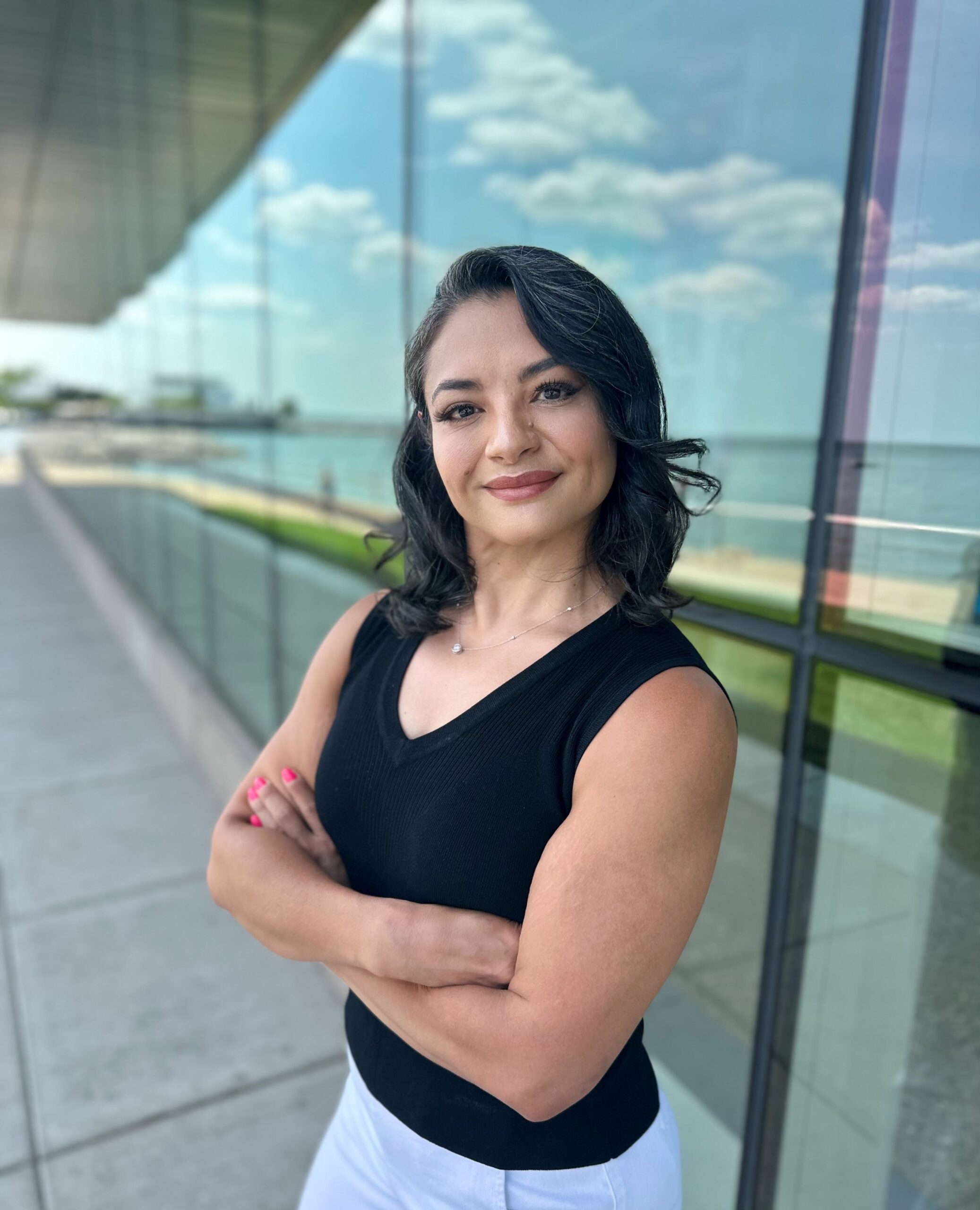
Dr. Pamela E. Harris is a Mexican-American mathematician and serves as Professor of Mathematics at the University of Wisconsin-Milwaukee. She received her BS from Marquette University and MS and Ph.D. in mathematics from the University of Wisconsin-Milwaukee. Dr. Pamela E. Harris’s research is in algebraic combinatorics and she is the author of over 70 peer-reviewed research articles in internationally recognized journals. She is a Fellow of the American Mathematical Society and of the Association for Women in Mathematics. Dr. Harris is also an award-winning mathematical educator, receiving the 2022 MAA’s Haimo Award for Excellence in Mathematical Education, the 2020 MAA Northeast Section Award for Distinguished Teaching, the 2019 MAA Alder Award for Distinguished Teaching by a Beginning Mathematics Faculty Member, and the 2019 Council on Undergraduate Research Mathematics and Computer Sciences Division Early Career Faculty Mentor Award. She is the President and co-founder of Lathisms: Latinxs and Hispanics in the Mathematical Sciences, cohosts the podcast Mathematically Uncensored, and is a coauthor of the books Asked And Answered: Dialogues On Advocating For Students of Color in Mathematics, Practices, and Policies: Advocating for Students of Color in Mathematics and Read and Rectify: Advocacy Stories from Student of Color in Mathematics.
Dr. Lisa Marano
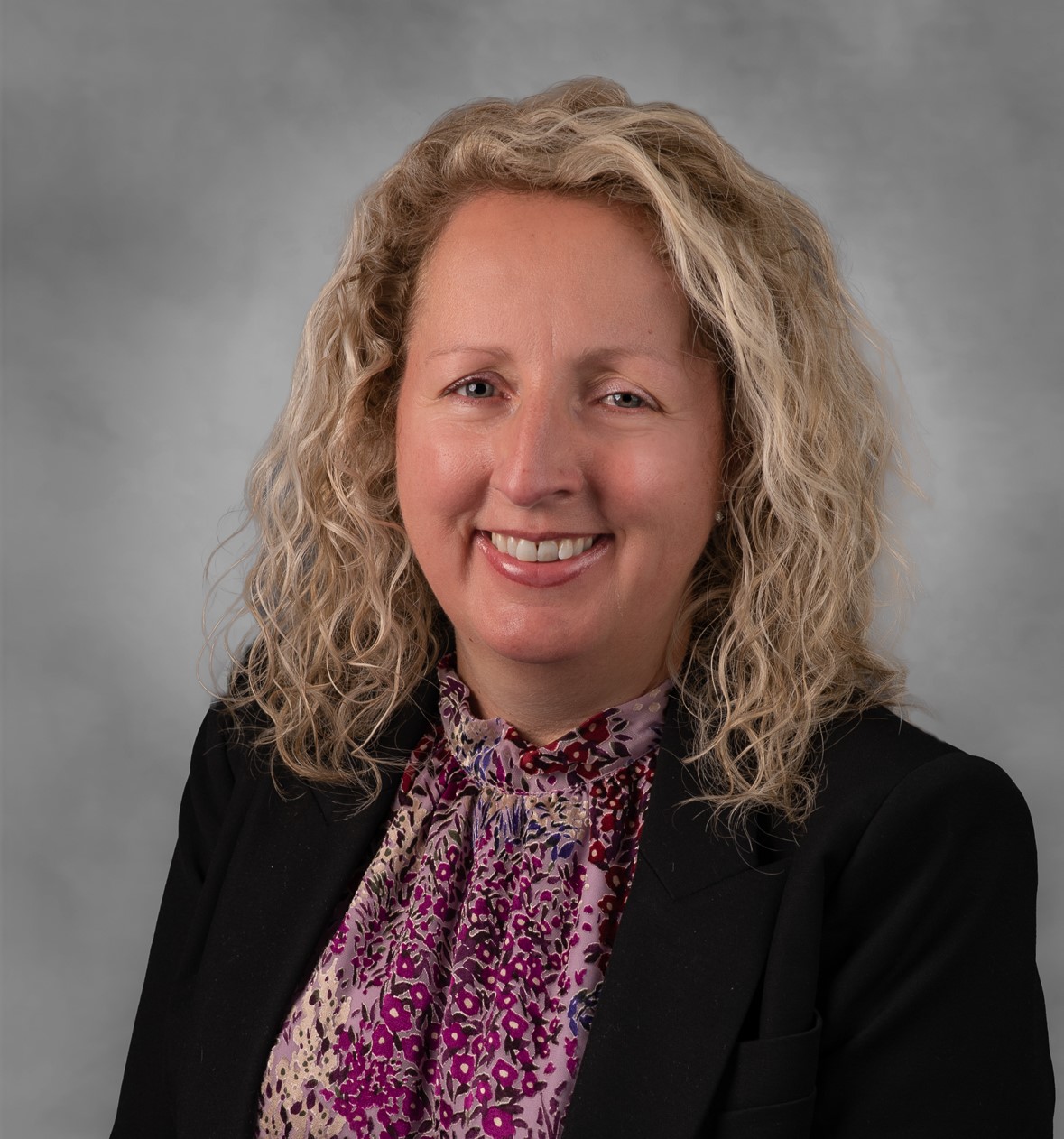
Lisa Marano is a Professor of Mathematics at West Chester University of Pennsylvania whose work spans teaching, leadership, and curriculum design in the mathematical sciences. She founded the university’s Actuarial Science and Mathematical Finance programs and previously served as Associate Dean and Interim Dean of the College of the Sciences and Mathematics. A long-time leader in the Mathematical Association of America, she served for eight years on its Board of Directors as Chair of the Council on Sections. Her scholarly interests intersect probability, statistics, and mathematical finance, and she is currently focused on improving student learning through Standards-Based Grading in discrete mathematics.