 Minicourses and Special Sessions
Minicourse: Creating Accessible (and Interactive) Course Materials
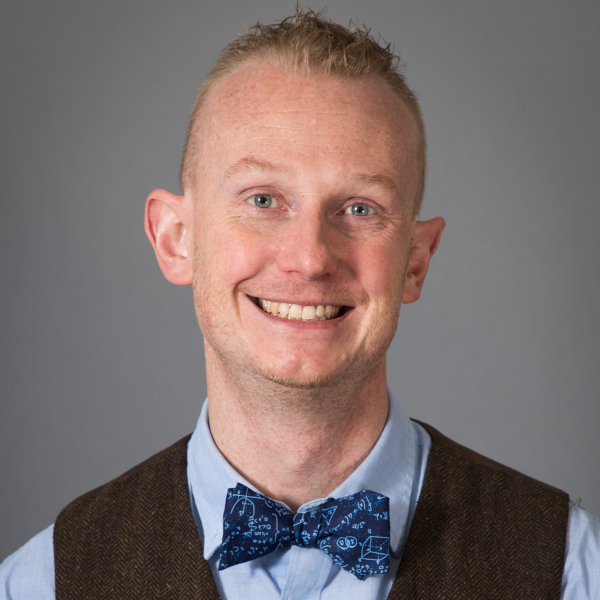 with Dr. Oscar
Levin
with Dr. Oscar
Levin
Abstract: Recent state and federal laws have motivated many universities to require that all digital materials shared with students meet official accessibility standards. This requirement can be especially challenging for STEM disciplines with materials involving formulas and diagrams.
In this minicourse, we will explore how PreTeXt, a free and open-source authoring system, can be used to easily produce all your course materials in fully accessible formats. Not only that, PreTeXt lets you include interactive exercises and demonstrations directly in your course documents.
The minicourse will be a hands-on tutorial (bring your laptop) that guides you through creating your first PreTeXt documents. You will create a syllabus, worksheet (or handout), and see how to organize these and future documents into a freely hosted online “course” that can be embedded in your learning management system.
Minicourse: Revising Course Syllabi for Proficiency: Standards‑ and Specifications‑Based Approaches
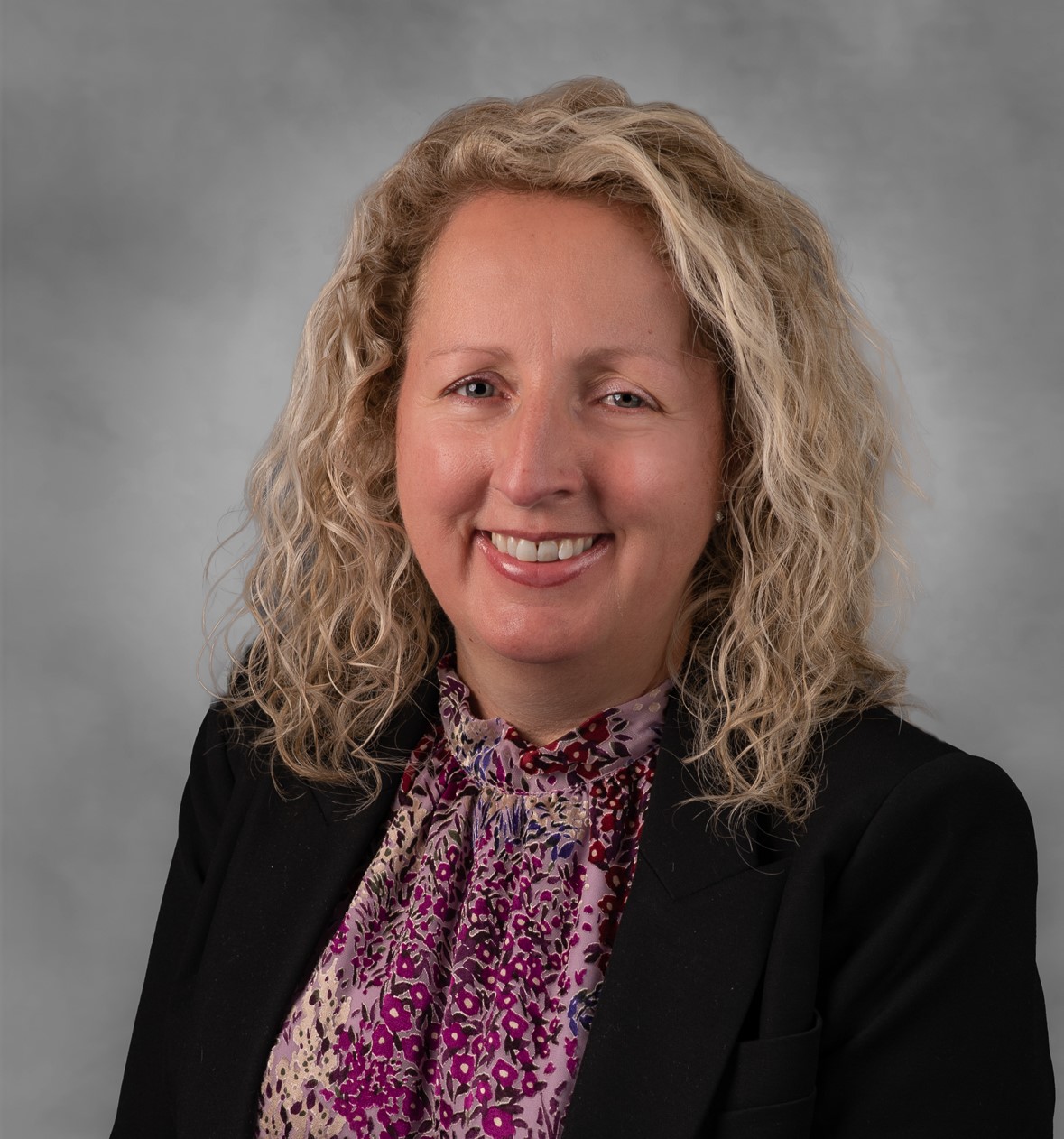 with Dr. Lisa
Marano
with Dr. Lisa
Marano
Abstract: This interactive workshop supports faculty in revising course syllabi to incorporate standards‑based grading, specifications‑based grading, or hybrid proficiency‑oriented approaches. Participants will engage in guided, hands‑on activities to rethink learning outcomes, assessment structures, and grading policies so that they better reflect how learning unfolds over time. Student progression data from a discrete mathematics course, visualized through Sankey diagrams, will be used as a reflective lens to illustrate how students often require multiple feedback cycles to demonstrate proficiency, particularly for more challenging learning outcomes. Rather than prescribing a single grading model, the session emphasizes adaptable design principles and faculty decision‑making. Participants will work directly with their own syllabi throughout the workshop and will leave with concrete, student‑facing materials, such as revised learning outcomes or specifications, a draft proficiency‑based grading scheme, and clear “How You’ll Be Able Assessed” language.
To get the most out of the workshop, participants are encouraged to come with a particular course in mind. Having a digital copy of the syllabus will be especially helpful, as much of the session is structured around hands‑on revision and drafting.
Student Special Sessions
We encourage students of all levels to present their mathematical work to peers and have the chance to practice mathematical communication in a supportive community environment.
- Work from Competitions or Class Projects
- Undergraduate Research
Open Special Sessions
- Recreational Mathematics
Engaging Students with games, puzzles, and outreach
Differential Equations | Organizer: Dr. Eli Goldwyn
Research on Teaching and Learning in Undergraduate Mathematics | Organizer: Dr. Sarah Kerrigan
Combinatorics, Graph Theory, and Discrete Math
Opportunities for National Mathematical Advocacy and Public Scholarship | Organizers: Dr. Cristina Negoita and Dr. Brandy Wiegers
This session will highlight the ways we can bring our expertise off campus and advocate for mathematics and education more broadly in both regional and national settings. The session will begin with a presentation on opportunities for national advocacy with groups like AAAS, followed by a discussion of state-based local policy fellowships. Then, we hope to have speakers present more public scholarship, describing how they use mathematical and data science skills to analyze and provide summaries shared with campuses or regional communities to better understand the state of the world.
- Innovation in Teaching and Learning in Undergraduate Mathematics | Organizer: Dr. Jeff Stuart
Share your ideas in teaching through these changing times, what changes you have made, and what surprises – positive or negative - you have encountered in implementing your ideas. How is the changing preparation of incoming students impacting what you teach and how you teach it in your college-level, calculus or post-calculus courses? How are you re-envisioning the curricular paths for your majors and minors as your school changes course caps? How are you accommodating the needs of client programs, such as data science, for tools that you have not traditionally covered in your courses? How are you updating your approach to teaching a course or all of your courses in light of the freely available power of WolframAlpha, ChatGPT and similar programs?
Progress reports on early stage and ongoing implementations are quite welcome!
- General Contributed Session